
2026 Order Management Systems: A Comprehensive Comparison and Tips from System Operators on How to Choose
This article compares multiple order management systems and explains key criteria for choosing the best one.
The comparison is based on the following criteria:
- Features
- Pricing
- Ease of implementation
- Scalability
- Customer support


Recently, the number of orders has been increasing, so I’m considering comparing and selecting an order management system, but there are so many options that I don’t know how to choose… Are there any tips for choosing the right one?

When it comes to order management systems, there is a wide variety in terms of types, features, and pricing. It is crucial to choose an order management system that suits your business operations.
Do you have the dilemma of wanting to compare order management systems, but not knowing which one to choose due to the overwhelming number of options?
As your e-commerce business grows, streamlining order processing becomes essential.
However, there are various types of order management systems, each with different features and costs.
To choose the best system for your business, it’s important to compare multiple systems and identify the one that fits your operational workflow.
In this article, we, the providers of the order management system "Sukeneko EC Management System," will explain in detail the key points for comparing order management systems, the benefits of implementation, and tips for choosing the right one. Let’s find the optimal system and streamline your operations!
ブログ監修者

助ネコ事業部(ECサポート担当)
運営実績19年以上の信頼!助ネコ事業部では、2007年2月1日のシステム提供開始以来、19年以上にわたり全国のネットショップ様にシステム導入支援と運用サポートを提供し、業務効率化と成長を支援しています。
『無料オンライン相談受付中!』
目次(クリックで移動)
- 1 What is an Order Management System?
- 2 Key Points for Comparing Order Management Systems: Criteria for Choosing the Best System
- 3 2026 Edition: Top 8 Recommended Order Management Systems — A Thorough Comparison of Features and Pricing
- 4 Key Points to Consider When Comparing Order Management Systems: 5 Checkpoints Before Implementation
- 5 Conclusion: Properly Compare Order Management Systems to Streamline Your Operations!
What is an Order Management System?

An order management system is a tool that allows you to centrally manage everything from order processing to inventory management, shipping, and customer support. It is an essential tool for businesses involved in product sales, such as e-commerce sites, retailers, and wholesalers.
By utilizing the system to automate and streamline processes, you can significantly reduce the workload.
With traditional manual management using Excel or other methods, issues such as order mistakes, shipping delays, and inventory discrepancies are more likely to occur. Implementing an order management system can lead to improved efficiency, cost reduction, and enhanced customer satisfaction.
Order management systems are essential for businesses that carry out the following operations:
- E-commerce site management (selling across multiple platforms such as Amazon, Rakuten, Mercari Shops, Shopify, BASE, etc.)
- D2C business (direct sales via your own e-commerce site)
- Retail and wholesale businesses (operating both physical stores and online sales)
- Manufacturers and logistics companies (managing warehouses and shipping operations)
Role of an Order Management System
The main roles of an order management system can be classified into the following four categories:
- Centralized Order Management
→ Automatically imports orders from multiple e-commerce platforms and physical stores, centralizing management. - Real-Time Inventory Management
→ Updates inventory data in real-time to prevent stockouts and overstocking. - Automated Shipping and Delivery Integration
→ Integrates with warehouses and delivery services to ensure smooth shipping processes. - Efficient Customer Support
→ Allows for easy access to order history and shipping status, making it easier to handle customer inquiries.
With these features, you can achieve improved operational efficiency, cost reduction, and increased sales.
Key Points for Comparing Order Management Systems: Criteria for Choosing the Best System

"What should you compare when selecting an order management system?" For those wondering, we will provide a detailed explanation of the "important points" to check when comparing order management systems.
Comparing the Basic Features of Order Management Systems
Order management systems come with various features designed to streamline order processing. However, not all systems offer the same features, so it's important to choose one that suits your business workflow.
Main Features to Check When Comparing
- Automatic Order Data Import (Integration with e-commerce sites and platforms)
- Inventory Management (Real-time inventory updates, alert features)
- Shipping Management (Shipping label generation, automatic shipment status updates)
- Customer Management (Recording purchase history, CRM functionality)
- Support for Multi-store and Multi-location Operations
Since each system excels in different areas, it’s important to compare order management systems and ensure that the features best suited to your business operations are included.
Comparing Integration with Other Systems
One often-overlooked aspect when implementing an order management system is its integration with existing systems. If the system cannot seamlessly integrate with e-commerce sites, platforms, accounting software, or logistics systems, it can lead to increased manual work and decreased operational efficiency.
Systems to Check for Integration During Comparison
- E-commerce Platforms (Shopify, BASE, Rakuten, Amazon, etc.)
- Payment Systems (Credit card payments, PayPal, Stripe, etc.)
- Accounting Software (freee, Money Forward, Yayoi Accounting)
- Logistics and Shipping Systems (Yamato Transport, Sagawa Express, Japan Post)
When comparing order management systems, make sure to check in advance whether they can seamlessly integrate with these tools.
Comparing Ease of Use and Usability
Since an order management system is used daily, ease of use is a very important factor. Choosing a system that is difficult to use can not only hinder operational efficiency but also increase the workload for your staff.
Key Points for Comparing Usability
- Is the system intuitive and easy to use for anyone?
- Is it compatible with smartphones and tablets, in addition to PCs?
- Can it be smoothly implemented without staff training?
When comparing order management systems, it’s recommended to take advantage of free trials or demos to try the system out yourself.
Comparing Pricing Plans and Cost Performance
Order management systems come with various pricing plans, ranging from free options to those costing several tens of thousands of yen per month. A higher price doesn’t necessarily mean more features, so it’s important to choose a system that offers a balance between cost and functionality.
Key Points for Comparing Pricing
- Initial Costs (Are there setup fees?)
- Monthly Subscription Fees (Are there feature limitations based on the plan?)
- Pay-Per-Use vs. Fixed Pricing (Does the cost change based on transaction volume?)
- Support Costs (Fees for customer support and customization)
When comparing order management systems, consider not only the pricing but also the potential cost savings from improved operational efficiency.
Comparing the Quality of Support
After implementing the system, the support system becomes crucial. If issues arise and quick assistance is not provided, it can disrupt business operations.
Key Support Features to Check During Comparison
- Is support available 24/7 or only during business hours?
- Are there multiple contact methods, such as email, phone, and chat?
- Is there a manual or training provided after implementation?
When comparing order management systems, it's also recommended to check reviews and ratings to assess the satisfaction of actual users.

With the Sukeneko EC Management System, you can thoroughly check if it suits your business operations through a free online consultation before implementation and a 30-day free trial.
2026 Edition: Top 8 Recommended Order Management Systems — A Thorough Comparison of Features and Pricing

From the many order management systems available, we’ve carefully selected the top 8 by comparing features, pricing, supported industries, and more.
Sukeneko EC Management System
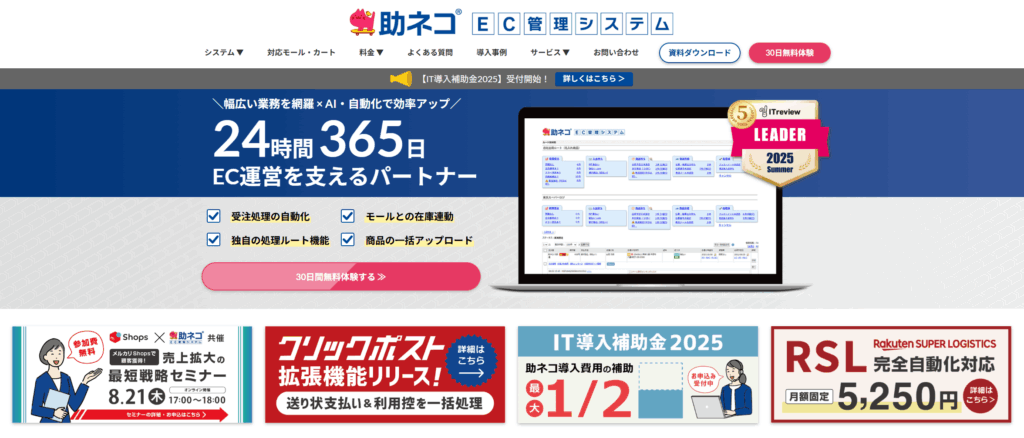
- Features:
- This e-commerce unified management system is easy to use, even for beginners. It offers essential features for managing an online store, including order management, product registration, inventory management, and purchase order management.
- With the Auto-Robo function and AI capabilities, it allows for automation of order processing and efficient customer support.
Next Engine

- Monthly Fee: From ¥3,000
- Features:
- This system allows for the unified management of multiple e-commerce malls and carts. It includes a wide range of features such as order management, inventory management, product registration, payment service integration, shipping label generation, warehouse integration, POS integration, core system integration, email communication, order and procurement management, app-based customization, and email marketing.
Aladdin Office
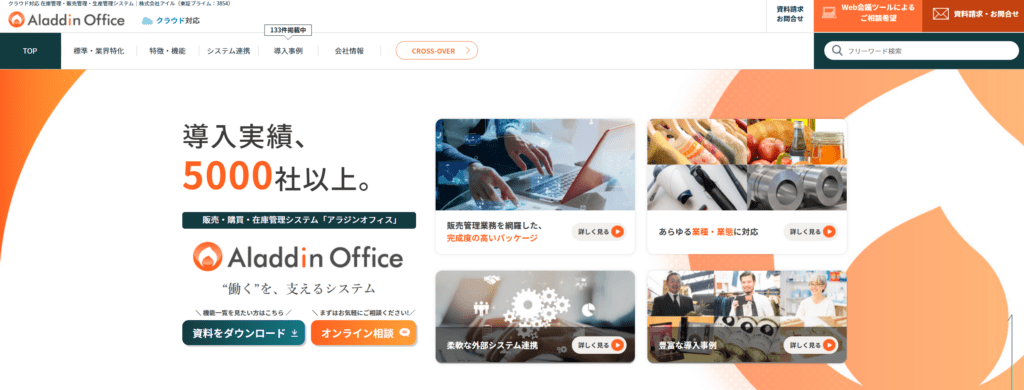
- Monthly Fee: Price upon inquiry
- Features:
- A B2B-focused order management system, specialized for wholesalers and manufacturers. It allows for the centralized management of essential B2B business functions such as order management, inventory management, and billing management.
CROSS MALL
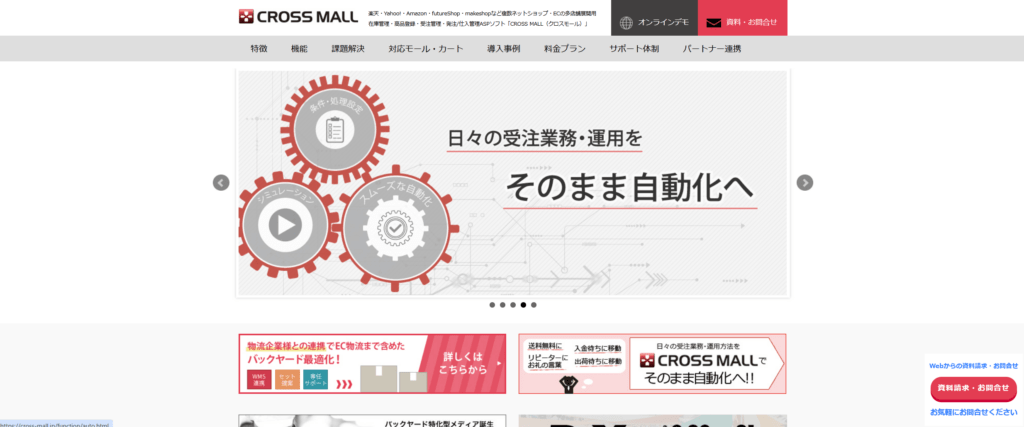
- Monthly Fee: From ¥10,000
- Features:
- Synchronizes inventory across multiple platforms and your own e-commerce site, preventing lost sales opportunities. It also offers robust sales data analysis features, which can help in making informed business decisions.
Smart Register
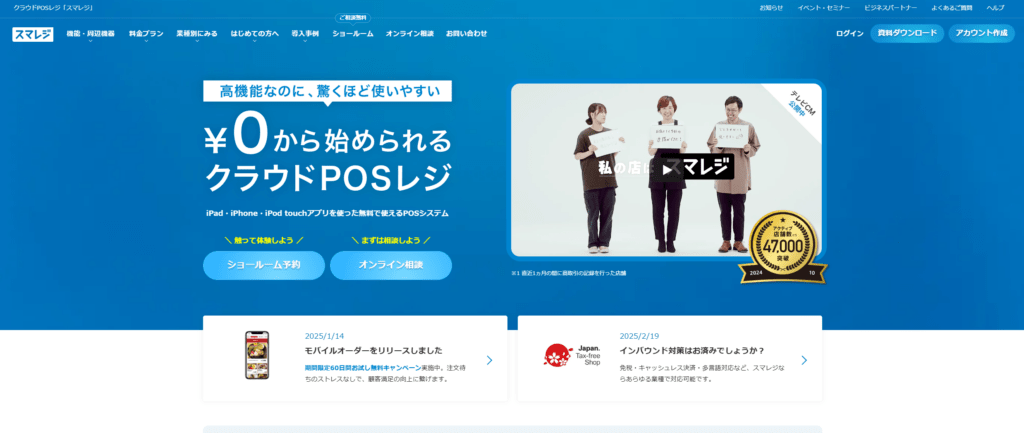
- Monthly Fee: From ¥5,500
- Features:
- An order management system that integrates with POS registers, allowing for the unified management of inventory and sales across both physical stores and e-commerce sites. This system is suitable for businesses that operate both in-store and online sales simultaneously.
Rakuraku Repeat
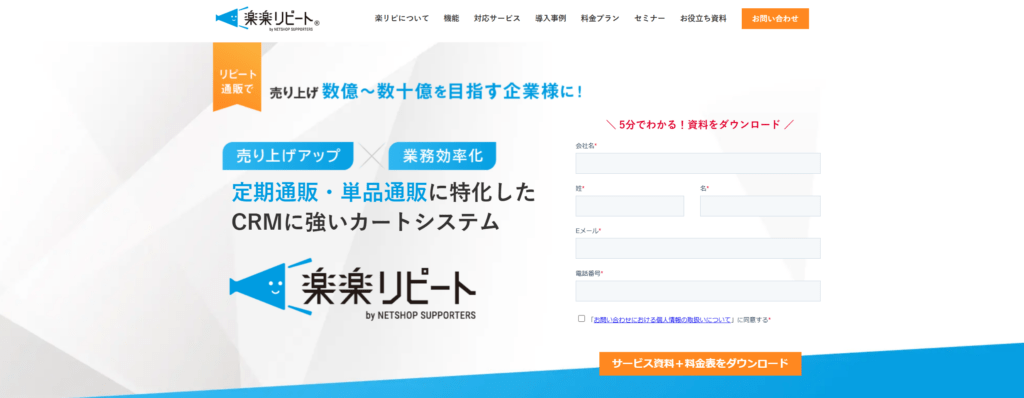
- Monthly Fee: From ¥49,800
- Features:
- A system specialized for subscription and repeat order e-commerce, automating subscription sales. It also includes customer management and payment features.
GoQSystem
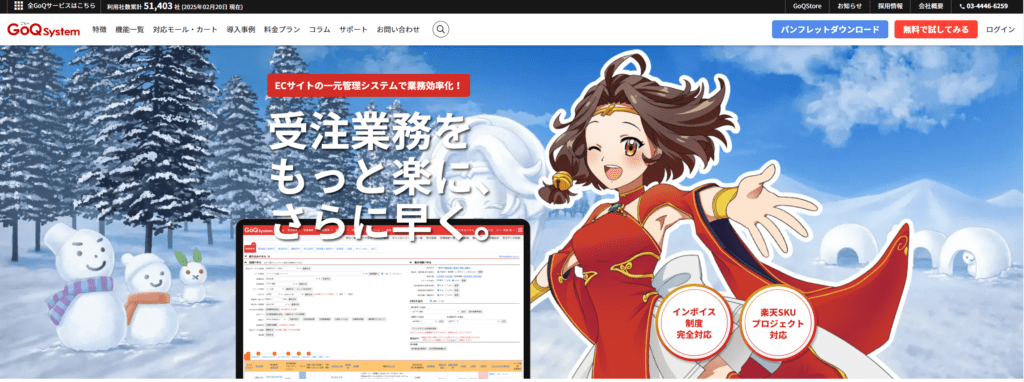
- Monthly Fee: From ¥15,000
- Features:
- A management system designed for businesses operating multiple platforms, allowing for one-stop management of order processing, inventory management, and shipping.
TEMPOSTAR

- Monthly Fee: From ¥1,650
- Features:
- A system that allows for the integration and management of multiple shopping carts and e-commerce malls, with detailed sales analysis available by SKU.
Key Points to Consider When Comparing Order Management Systems: 5 Checkpoints Before Implementation

Clearly Define the Purpose of System Implementation
Don’t implement an order management system just because it seems convenient.
An order management system is a tool to solve business challenges.
If you don’t clarify your objectives, you may end up choosing a system with unnecessary features or fail to achieve the expected results after implementation.
Clarify "What do you want to improve?"
- Reduce the effort spent on order processing
- Make inventory management real-time
It’s important to identify specific challenges and choose a system that can address them.
Recommendation: Organize your current business workflow and clearly identify "where time is being spent" and "which tasks you want to automate" before starting your comparison.
Don’t Choose Based Only on Low Cost
Thinking "it’s a good deal because it’s cheap" can be risky.
Low-cost systems may lack essential features or have insufficient support. As a result, operational efficiency may not improve, and you might have to implement additional systems.
Consider the total cost: "Initial Costs + Monthly Fees + Additional Costs"
It’s important to compare not just the monthly fee but also the "setup costs," "support fees," and "additional feature costs" to avoid unexpected expenses.
Recommendation: Compare the pricing plans of each system in detail and check if they provide the "necessary features" and whether "additional costs" will arise.
With the Sukeneko EC Management System, you can thoroughly check if it suits your business operations through a "free online consultation" before implementation and a "30-day free trial."
Is the system regularly updated?
Avoid systems that haven’t been updated for a long time
IT technology evolves daily. A system that hasn’t been updated may fail to integrate with the latest e-commerce platforms or logistics systems, and could face increased security risks.
Check if the system supports the latest e-commerce environment
→ It’s important to confirm whether the system can quickly adapt when platforms like Rakuten, Amazon, or Yahoo! Shopping make changes to their specifications.
Recommendation: Check the system’s update frequency and review past version histories. Look for regular updates with new features, and also check the official website and user reviews for more insights.
Check Integration with Other Systems
Don’t think of the order management system in isolation
Order management becomes more efficient when integrated with various tools, such as e-commerce platforms, accounting software, and logistics management systems. Without integration capabilities, manual work increases, and operations become more complicated.
"Handling via manual CSV uploads" is inefficient
→ Without integration features, you would need to manually enter data or upload CSV files, which is time-consuming and labor-intensive. Especially when managing multiple e-commerce platforms, lack of real-time synchronization can lead to inventory discrepancies and errors.
Recommendation: Verify in advance if the order management system can seamlessly integrate with your existing e-commerce platforms, accounting software, and logistics systems.
Is the Support System Robust?
Check if you can get quick assistance when you encounter issues after implementation
If the support system is not well-established, system errors or changes in specifications can disrupt business operations.
Low-cost plans may have limited support
→ Some systems offer email-only support with no phone assistance on cheaper plans. Considering the response time in case of emergencies, it’s important to compare whether adequate support will be available.
Recommendation: Check the support hours, contact methods (phone, chat, email, etc.), and actual user reviews to ensure you can rely on the support system.
When comparing order management systems, it’s crucial to evaluate these points to avoid regrets after implementation. Organize the checklist and choose the best system that fits your business needs.
Conclusion: Properly Compare Order Management Systems to Streamline Your Operations!

Order management systems are crucial tools for streamlining order processing, inventory management, and shipping operations in e-commerce businesses.
However, since features, pricing, integration capabilities, and support systems vary by system, improper comparison can actually increase the burden on your operations.
By keeping in mind the five key points introduced in this article:
- Clarify the purpose of implementation
- Don’t choose based solely on low cost
- Check the system’s update status
- Check integration with other systems
- Compare the level of support provided
You can choose the system that best fits your business needs.
For those who are unsure which order management system is right for their business, we highly recommend [Sukeneko]!
Reasons why Sukeneko is chosen:
- Multi-platform and Multi-store Support: Seamlessly integrates with major e-commerce platforms such as Rakuten, Amazon, and Yahoo! Shopping.
- Cloud-based and Easy to Implement: No installation required, and accessible from anywhere.
- Comprehensive Support System: Our dedicated staff provides full support whenever you encounter difficulties with the system.
- Regular Updates: A reliable system that continues to adapt to the latest e-commerce environments.
Sukeneko is offering a 30-day free trial! If you’re currently comparing order management systems, be sure to try out Sukeneko!