
8 Expert-Recommended E-commerce Unified Management Systems! A Guide to Choosing the Right One Without Mistakes
This article compares 8 e-commerce unified management systems and explains their features, pricing, and key differences.
The comparison is based on the following criteria:
- Features
- Pricing
- Ease of use
- Customer support
- Automation capabilities

I’m managing online shops like Rakuten and our own EC site separately, and it’s become too much work — I’m at my limit. Do you have any recommendations for an all‑in‑one e‑commerce management system?

E-commerce unified management systems vary greatly in terms of features and pricing depending on the type. However, if you compare them properly, you're sure to find a system that suits your needs.
Aren’t you feeling the limits of manual work when it comes to product registration, inventory adjustments, and more?
When managing multiple e-commerce platforms, issues like inventory discrepancies, order mistakes, and complicated product management gradually become more serious. An "E-commerce Unified Management System" is the solution to these problems, helping you solve them all at once.
That said, since the features and prices vary by system, some of you might be wondering, How do I choose the right one that will truly make my work easier?
In this article, industry professionals with extensive hands-on experience will carefully select 8 e-commerce unified management systems and provide a clear explanation on how to choose the right system without making mistakes.
This article is recommended for the following people
- Managing multiple malls and carts manually
- Not sure which e-commerce unified management system to choose
- Seriously considering streamlining operations and reducing labor costs for your online store
ブログ監修者

助ネコ事業部(ECサポート担当)
運営実績19年以上の信頼!助ネコ事業部では、2007年2月1日のシステム提供開始以来、19年以上にわたり全国のネットショップ様にシステム導入支援と運用サポートを提供し、業務効率化と成長を支援しています。
『無料オンライン相談受付中!』
目次(クリックで移動)
- 1 What is an E-commerce Unified Management System? Features and Capabilities
- 2 Main Features of E-commerce Unified Management Systems
- 3 Benefits and Drawbacks of Implementing an E-commerce Unified Management System
- 4 Top 8 Expert-Recommended E-Commerce Unified Management Systems
- 5 Important Considerations When Choosing an E-commerce Unified Management System
- 6 Conclusion: Choose the Right System for Your Business from the Top 8 E-Commerce Unified Management Systems!
What is an E-commerce Unified Management System? Features and Capabilities

An E-commerce Unified Management System is a tool that allows you to manage orders, inventory, and product information from multiple online stores such as Rakuten, Amazon, and Mercari Shops all in one place.
For example, it helps prevent issues like inventory discrepancies and order mistakes such as “A product sells on Rakuten, but I forget to update the stock on Mercari Shops, resulting in a stock-out and the need to cancel the order…”
This system is widely adopted by many e-commerce businesses as a tool to avoid such problems.
Below, we will briefly explain the features and capabilities of an E-commerce Unified Management System.
Automatic Inventory Sync
Automatically Sync Inventory Between Shops
For example, if a product sells on Rakuten, the stock on Amazon and Mercari Shops will automatically decrease as well.
With automatic inventory syncing, you can prevent cancellations and complaints caused by inventory discrepancies.
Centralized Order Management
You can view and process orders from each mall on a single screen.
You can also manage processes like shipment instructions, tracking number registration, and payment confirmations all in one place, significantly reducing the workload for your staff.
Bulk Product Registration and Updates
You can apply changes to product names, prices, descriptions, images, and more across multiple platforms at once.
This eliminates the need to repeat the same tasks on each platform every time you add a new product or change prices.
Platform-Specific Handling
Each platform or cart, such as Rakuten, Amazon, and Mercari Shops, has different rules and required fields for product registration.
With a unified management system, the system automatically converts and applies the data in the optimal format for each platform, saving you the time and effort of re-entering information for each one.
Main Features of E-commerce Unified Management Systems

An e-commerce unified management system is designed to streamline the complex tasks that arise across multiple platforms and carts. It mainly includes the following five features:
Inventory Management Feature
- Automatically syncs inventory levels in real-time across different platforms and carts.
- When a product sells on one platform, the stock is immediately updated on other shops.
- Effectively prevents cancellations due to overselling or inventory discrepancies.
Order Management Feature
- View and process order information from Rakuten, Amazon, Mercari Shops, and other platforms all in one place.
- Handle shipment processing, status updates, and tracking number registrations together.
- Manage orders from multiple stores on a single screen, significantly reducing workload.
Product Management Feature
- Bulk register and update product names, prices, images, descriptions, and more.
- Automatically optimizes the data to fit the specifications of each platform.
- Allows for platform-specific changes (e.g., adding tags only on Rakuten).
Customer Management Feature
- Integrate and centrally manage customer information across different platforms.
- Efficiently handle purchase history and customer inquiries.
- Can be used to promote repeat purchases and improve customer service (CS).
Analytics and Reporting Feature (Available with Supported Tools)
- Sales analysis by platform and product.
- Visualization of inventory turnover rates and order volumes.
- Use data to adjust sales strategies and inventory levels.
Benefits and Drawbacks of Implementing an E-commerce Unified Management System

An e-commerce unified management system is a powerful tool for efficiently running multiple online stores, but it has both benefits and drawbacks.
Here, we will provide a detailed explanation of both.
Benefits of Implementing an E-commerce Unified Management System
Improved Efficiency and Reduced Work Time
By centralizing inventory management and order processing across multiple platforms, the effort involved in these tasks is significantly reduced.
Automating tasks like inventory adjustments and order processing helps minimize human errors while cutting down on work time.
Prevention of Inventory Discrepancies and Order Mistakes
Since inventory is synced in real-time, stockouts, overselling, and order mistakes can be prevented before they happen.
Additionally, by centralizing order information, you can avoid missed orders on each platform, which leads to improved customer satisfaction.
Improved Accuracy in Business Decision-Making
By analyzing sales data and inventory status in one place, you can make quick and informed business decisions.
Visualizing which products are selling on which platforms helps optimize purchasing and promotional strategies based on data.
Prevention of Task Dependency on Specific Individuals
With many tasks automated, anyone can perform work at the same level of efficiency.
As a result, business operations become standardized, reducing reliance on specific staff members.
Drawbacks of Implementing an E-commerce Unified Management System
Initial Implementation Costs
E-commerce unified management systems can have high initial costs due to their advanced features.
Some systems may also have monthly usage fees, so it's important to assess the cost-effectiveness before making a decision.
Time-Consuming System Selection
There are many different e-commerce unified management systems on the market, and selecting the one that best suits your business can require time and effort.
Additionally, if the chosen system doesn’t fit your operations, re-selection or customization may be necessary.
Learning Costs Before Launch
After implementing the system, training on how to operate and use it is necessary.
Since it may take time for staff to become proficient, it’s essential to allow for a learning and preparation period before the system goes live.
Potential Integration Limitations Between Platforms and Systems
Not all platforms and cart systems can fully integrate with a unified management system.
This is especially true for newer or niche platforms, which may have integration limitations.
Top 8 Expert-Recommended E-Commerce Unified Management Systems

To efficiently manage multiple online shops and marketplaces, an e-commerce unified management system is an essential tool.
Here, we introduce 8 e-commerce unified management systems carefully selected by industry professionals, along with their key features and pricing.
Sukeneko EC Management System
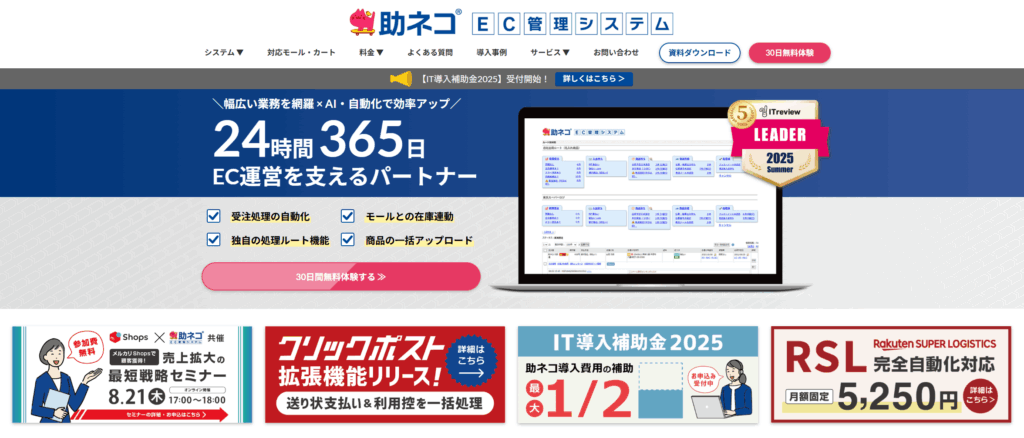
- Features:
- This e-commerce unified management system is easy to use, even for beginners. It offers essential features for managing an online store, including order management, product registration, inventory management, and purchase order management.
- With the Auto-Robo function and AI capabilities, it allows for automation of order processing and efficient customer support.
Next Engine

- Monthly Fee: From ¥3,000
- Features:
- This system allows for the unified management of multiple e-commerce malls and carts. It includes a wide range of features such as order management, inventory management, product registration, payment service integration, shipping label generation, warehouse integration, POS integration, core system integration, email communication, order and procurement management, app-based customization, and email marketing.
Aladdin Office
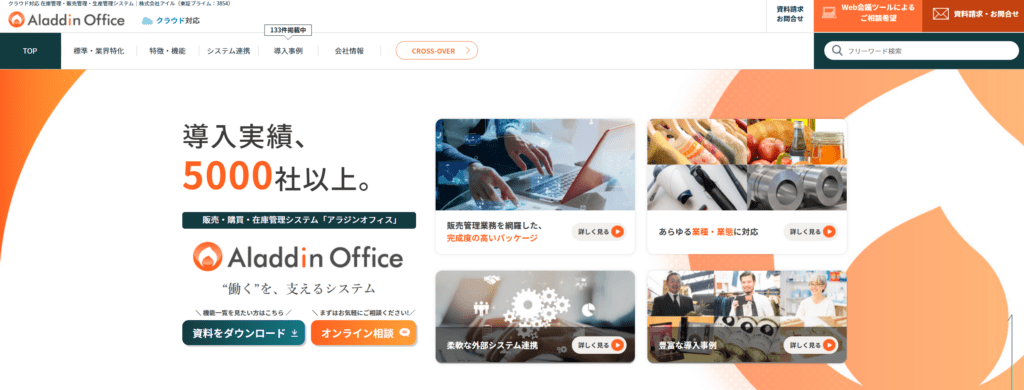
- Monthly Fee: Price upon inquiry
- Features:
- A B2B-focused order management system, specialized for wholesalers and manufacturers. It allows for the centralized management of essential B2B business functions such as order management, inventory management, and billing management.
CROSS MALL
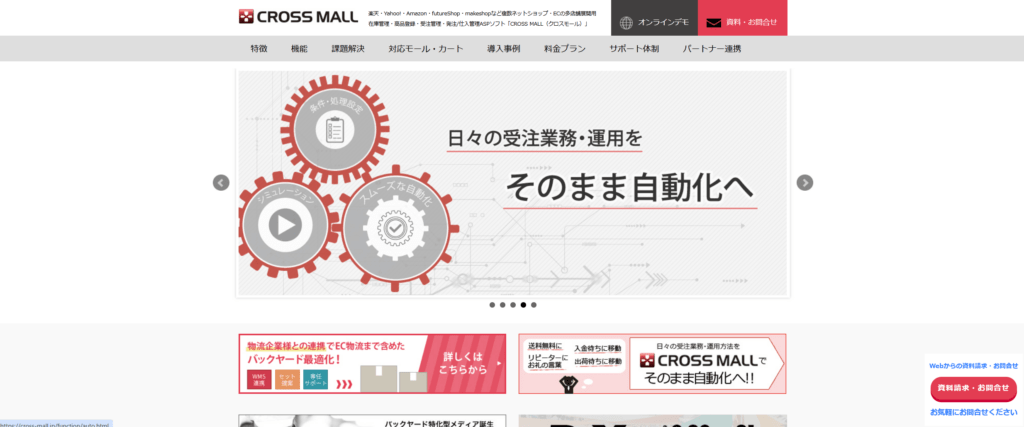
- Monthly Fee: From ¥10,000
- Features:
- Synchronizes inventory across multiple platforms and your own e-commerce site, preventing lost sales opportunities. It also offers robust sales data analysis features, which can help in making informed business decisions.
Smart Register
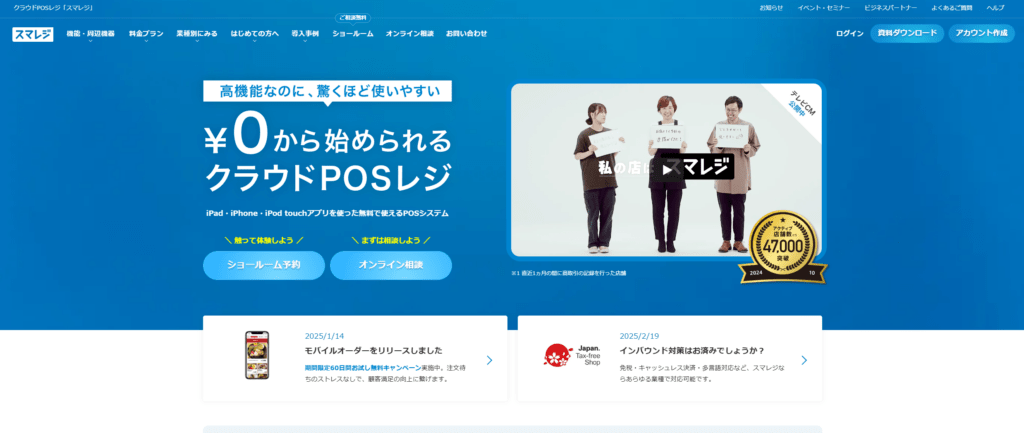
- Monthly Fee: From ¥5,500
- Features:
- An order management system that integrates with POS registers, allowing for the unified management of inventory and sales across both physical stores and e-commerce sites. This system is suitable for businesses that operate both in-store and online sales simultaneously.
Rakuraku Repeat
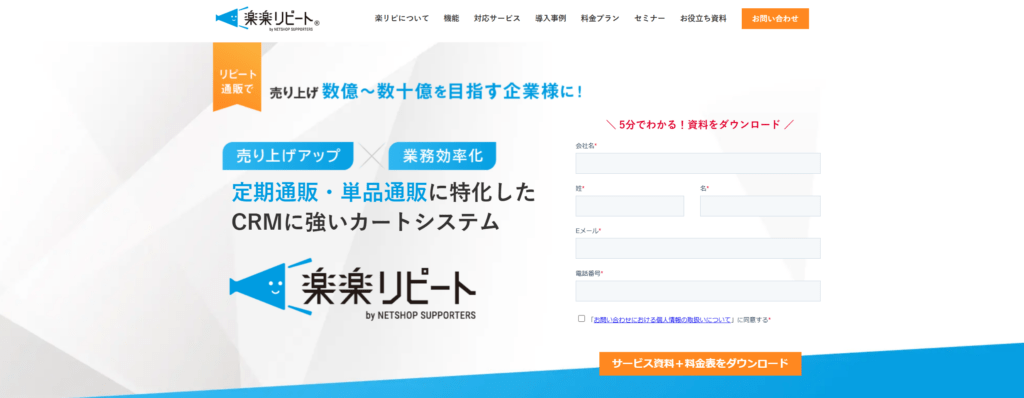
- Monthly Fee: From ¥49,800
- Features:
- A system specialized for subscription and repeat order e-commerce, automating subscription sales. It also includes customer management and payment features.
GoQSystem
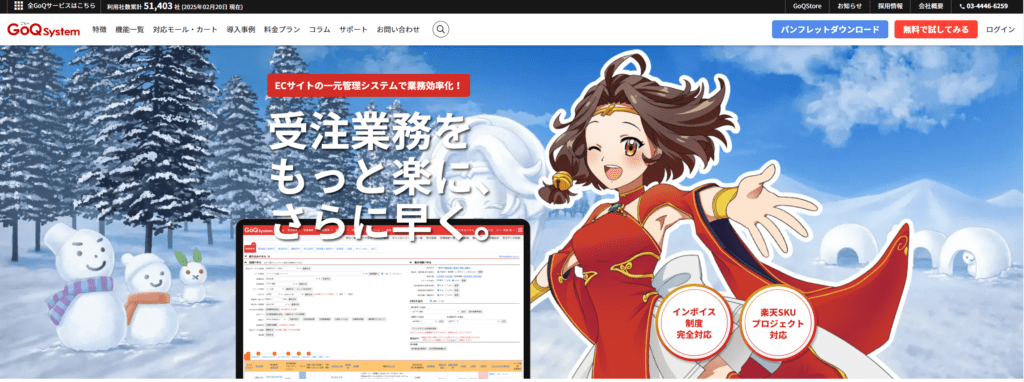
- Monthly Fee: From ¥15,000
- Features:
- A management system designed for businesses operating multiple platforms, allowing for one-stop management of order processing, inventory management, and shipping.
TEMPOSTAR

- Monthly Fee: From ¥1,650
- Features:
- A system that allows for the integration and management of multiple shopping carts and e-commerce malls, with detailed sales analysis available by SKU.
Important Considerations When Choosing an E-commerce Unified Management System

When selecting an e-commerce unified management system, there are several factors to consider, such as:
- Features
- Costs
- Support
Here, we will briefly introduce some key considerations when choosing an e-commerce unified management system.
Fit of System Features to Your Business Needs
Some systems come with a wide range of features, but it's important to narrow down the necessary features based on your business needs.
For example, check if the system includes features that align with your operations, such as inventory management, order management, and customer management.
Cost and Pricing Structure
Pricing structures vary across systems, and there may be monthly fees, initial costs, or additional charges.
Choose a system that fits your budget while providing the necessary features. It’s also important to consider long-term operational costs.
Support Quality
It’s crucial to check if the system has a reliable "support system" that can promptly address any issues or questions after implementation.
Ensure that phone or email support is available, and check the availability hours and the quality of support.
Security Measures
Since e-commerce unified management systems handle a lot of customer information and transaction data, security measures are a must.
Check if the system has sufficient security measures, such as data encryption and access control.
Integration with Other Systems
It’s also important to verify if the system can integrate smoothly with your existing business systems or tools.
For instance, integration with accounting software or CRM can significantly streamline operations.
Scalability of the System
If your sales increase or if you plan to add new channels in the future, it’s important to consider whether the system can adapt to those changes.
Choose a system that offers long-term scalability and can grow with your business.
Conclusion: Choose the Right System for Your Business from the Top 8 E-Commerce Unified Management Systems!

Implementing an e-commerce unified management system can streamline your operations and reduce costs.
However, choosing the right system is not a straightforward task. Selecting a system that aligns with your business workflow, size, and budget is key to success.
The 8 systems introduced here each have their strengths, but if you prioritize "operational efficiency" and "cost performance," we strongly recommend Sukeneko!

This is because Sukeneko can handle everything from "inventory management" to "order processing" and "product registration" all in one. Additionally, it is praised for its easy-to-understand UI, making it simple to learn and easy to teach staff. Furthermore, you can select only the necessary features, which makes it excellent in terms of cost performance.
The biggest appeal of Sukeneko is its flexible pricing structure.
You can individually subscribe to only the features you need, such as:
- Order management
- Product registration
- Inventory management
- Purchase order management
Additionally, there is no minimum usage period, so you can start using the system and see if it fits your business before fully committing—this is a key advantage.
Why not transform your e-commerce operations by implementing Sukeneko?
Let’s grow your e-commerce business together with Sukeneko!